|
|
|
|
|
|
|
|
|
|
|
|
- Your voice matters: Shaping the future of work‑based learning
- De-escalation Skills micro-credential extended to all Health and Wellbeing sectors
- What's next for your graduates?
- Support with the cost of training
- Maintaining privacy in assessments, a reminder
|
|
|
|
|
|
|
Welcome to Careerforce's March 2026 update
|
|
|
Kia ora koutou
Welcome to the March edition of Skills for Good, which brings together a mix of strong results, real‑world impact, and an important opportunity for employers to shape what comes next.
We continue to be encouraged by the feedback shared through our most recent Employer Survey, and in this edition we continue to unpack some key insights - starting with a closer look at the barriers to training completion, and what helps learners succeed in busy workplace environments. These are practical insights, grounded in employer experience, and will help inform the actions we share back with you shortly.
This month, we’re also pleased to share Kate Van Peer’s story, a great example of how workplace‑based training can build confidence, capability and capacity for both learners and their employers. Stories like Kate’s remind us why investing in people, and supporting them to complete their training, makes such a meaningful difference on the ground.
Alongside these stories and insights, we are approaching a critical next phase for work‑based learning. Further industry consultation is expected to occur over the coming months, and employer voice will be central to shaping the future system. I strongly encourage you to read on, reflect on what’s being shared, and - when the consultation opens - to engage and have your say.
Ngā mihi nui
Rod Bentham
Executive Director, Careerforce
|
|
|
|
|
|
|
|
|
Your voice matters: Shaping the future of work‑based learning
|
|
|
|
|
New Zealand’s vocational education system continues to evolve - and while these system‑level changes can feel complex,
one thing remains constant: work‑based learning with Careerforce continues business as usual. Since 1 January, Careerforce has been operating as a distinct division within an Industry Skills Board (ISB), following the disestablishment of Te Pūkenga.
|
|
|
|
|
|
|
|
This is a temporary arrangement, designed to provide stability while further industry consultation determines the future shape of work‑based learning.
An upcoming consultation will give employers the opportunity to help shape what comes next. The consultation is expected to occur over the next month or two. The outcomes will directly inform future decisions about how work‑based learning is
structured and delivered, and will directly influence how Careerforce transitions out of the ISB.
We are aware that some alternative providers are already approaching employers to discuss potential future arrangements. We strongly encourage employers not to engage in these discussions at this stage. Until the formal consultation opens, full information about the proposed models, implications, and transition pathways is not yet available. Waiting for the official consultation will ensure you are able to consider complete, consistent and accurate information before forming your views and providing feedback.
Employer voice is critical. In previous consultations, employers have consistently called for stability, certainty and industry‑led solutions. This consultation is the right forum to reinforce what matters most to you and your organisation, and to do so on an informed basis.
As we have done since these reforms first announced in 2019, we will keep you updated as consultation details are confirmed, including when and how to participate.
|
|
|
|
|
|
|
|
|
|
|
|
|
De-escalation skills micro-credential extended to all health and wellbeing sectors
|
|
|
|
|
We’re excited to launch version 2 of the De-escalation skills and techniques micro-credential* for the health and wellbeing sector.
Upskilling your team with this micro-credential can help them make meaningful contributions to their communities by enhancing safety, communication, and wellbeing in high-stress environments.
The micro-credential was originally developed for the Mental Health and Addiction sector only, but following widespread interest across our sectors, has now been enhanced and extended to benefit all health and wellbeing sectors.
* Careerforce micro‑credentials are short NZQA‑approved courses, achieved on-the-job, that certify a specific, job‑relevant skill or
capability.
Level 4, Credits 6, Expected Duration 1 month
This micro-credential formally recognises the skills and techniques required to manage and de-escalate challenging situations within health and wellbeing settings.
By mastering de-escalation approaches, graduates help reduce the risk of
harm, foster respectful interactions, and encourage recovery-oriented support. They will gain the theoretical and practical knowledge to demonstrate competencies required to:
- Describe the role of communication in de-escalation when working in a health or wellbeing setting.
- Describe the
triggers that can lead to behaviours of concern, and the correct use of de-escalation when working in a health or wellbeing setting.
Visit the website, download the flyer, or reach out to your Regional Workplace Advisor for more information and to enrol staff.
|
|
|
|
|
|
|
|
|
|
|
|
|
What's next for your graduates?
|
|
|
|
|
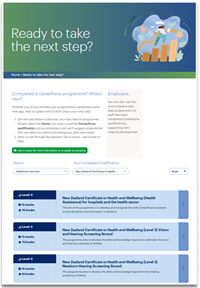
A common theme that emerges when we engage with graduates, is their immense pride at their achievement and their passion to continue their learning journey.
To support their ongoing development, we've developed a tool to help your staff explore next-step programmes. The tool can also be used to help you identify development opportunities and support workforce planning. We’ve made it easy to explore further options in one place. Simply visit our next steps web page: careerforce.org.nz/next-steps.
|
|
|
|
|
|
|
|
|
|
|
|
|
From receptionist to future nurse: Apprentice's journey of growth and connection
|
|
|
|
|
When Kate Van Peer joined Travis Medical Centre in Christchurch two years ago, she didn’t expect the role would reignite her passion for nursing. Starting on reception before moving into a healthcare assistant role, she quickly discovered how much she valued building relationships with patients.
|
|
|
|
|
|
|
Originally beginning nursing study, Kate stepped away unsure of her path. However, completing a Primary Care Practice Assistant apprenticeship through Careerforce changed that. Gaining hands-on experience in venepuncture and immunisation, alongside formal learning, helped rebuild her confidence and skills.
|
|
|
|
|
|
|
Supported by her manager and Careerforce advisor, Kate balanced full-time work with flexible, online study. She particularly valued learning more about New Zealand’s health system, demographics, and cultural context, which strengthened her ability to support patients.
The experience proved transformative. What began as a job, evolved into a renewed career direction. Kate has now decided to return to nursing study, starting her second year soon, while continuing casual work at the practice.
She believes the apprenticeship is highly valuable for healthcare assistants, providing knowledge, confidence, and
growth opportunities. Kate’s journey highlights how the right support and training can open doors, turning everyday work into the foundation of a meaningful healthcare career.
|
|
|
|
|
|
|
|
|
|
|
|
|
|
|
|
|
Support with the cost of training
|
|
|
|
|
| Apprenticeship Boost:
Get $500/month (excl. GST) for eligible first-year apprentices
|
|
|
|
| Invest in staff with lived experience with free Peer Support training until June 2026
|
|
|
|
|
|
|
Employers can claim Apprenticeship Boost funding which provides a $500 (excl. GST) per month subsidy to employers of eligible first-year apprentices, so up to $6,000 (excl. GST) per apprentice. Apprenticeship Boost will continue until 30 June
2028.
|
|
|
|
Support your staff in gaining a Peer Support qualification through a fully funded grant programme. This programme is ideal for employees with lived experience who are ready to formalise their skills and make an even greater impact. The Peer Support grant is available until 30 June 2026 (subject to continued funds being available).
|
|
|
|
|
|
|
|
|
|
|
| Information on grants available that support the cost of training
|
|
|
|
| Build capability and reduce training costs by investing in your own workplace assessor
|
|
|
|
|
|
|
Please check this page regularly for updates on available grants. We update the information as soon as we are aware that new grants are available. Since many grants are only open for a short time, we encourage you to visit this page frequently so you don’t miss out. More on funding options >>
|
|
|
|
One way to reduce training costs is to have a member of your team become a workplace assessor. Employer-led training typically has lower enrolment fees, and having an assessor within your organisation means the training is guided by someone who truly understands your business and its needs. More about Employer-led and Full-service >>
|
|
|
|
|
|
|
|
|
|
|
Maintaining privacy in assessments, a reminder
|
|
|
|
|
Together with the employers we support, Careerforce is committed to protecting the privacy and confidentiality of learners, employers, and the people they support, and ensuring compliance with the Privacy Act 2020, and all relevant codes. To support this commitment, it is important that all learners and observers ensure that assessments do not contain any information that could identify an individual.
Learners should remove or replace identifying details (for example, names, addresses, contact details, ID numbers, and specific dates where sensitive) and use general descriptions or neutral placeholders instead. Where there is any uncertainty about what can be included, learners should seek guidance from their assessor before submitting. Including personal or identifying information can be a breach of privacy and may result in an assessment being returned to the learner for correction before it can be marked.
We will be reminding both learners and assessors of the importance of this, and you may wish to reinforce these expectations within your workplace to equally ensure your own compliance with privacy obligations. More information can be found here.
|
|
|
|
|
|
|
|
|
|
|
|
|
Support for your learners
|
|
|
|
|
Your new learners can kickstart their learning
|
|
|
|
Learners invited to attend face to face learner events
|
|
|
|
|
|
|
|
|
|
|
New learners are strongly encouraged to kickstart
their learning by enrolling in a 'Good To
Go' online onboarding session. These one-hour sessions give learners an introduction to Careerforce, work-based learning, and how to get started.
Over the past year we’ve supported over 300 learners to kickstart their learning journey. From pre and post surveys amongst attendees, 15% felt very confident in their ability to complete their programme before their Good to Go session, increasing to 76% after their
session.
We ask that you encourage your learners to attend. Please keep an eye on our website for details of upcoming sessions: Learn more >>
|
|
|
|
Do you have learners who need some extra face to face support with their training programme?
Our Achieve Study Hubs are in-person sessions where they can drop in, ask questions, meet with other learners, and receive help with their learning.
Please check out the list of 2026 Achieve Study Hubs: Learn more >>
We also organise events to support learners who identify as having Māori heritage. Check out the schedule of Wānanga ako events for 2026: Learn more >>
as well as events to support our Pacific learners. Check out the schedule of Talanoa events for 2026: Learn more
>>
|
|
|
|
|
|
|
|
|
|
|
|
|
|
|
Extra support for your learners
|
|
|
|
|
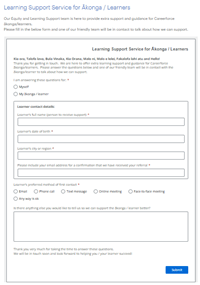
Do you have Careerforce learners who you think may benefit from additional support? We offer proactive, individualised support for learners with neurodiverse profiles (e.g., ADHD, dyslexia, ASD), physical/sensory disabilities, mental health challenges, and Language, Literacy and Numeracy (LLN) needs. If you think they may benefit from extra support, please encourage them to complete the form on our website on this page and one of our team will be in contact to talk about how we can support
them.
|
|
|
|
|
|
|
|
|
|
|
|
Enhancing student support staff skills through Careerforce Apprenticeship Programmes
|
|
|
|
|
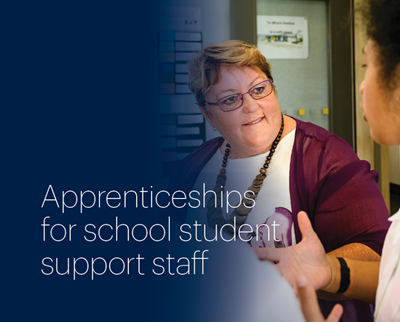
Schools can improve the quality of their student support staff with Careerforce Apprenticeships.
Our 18-21 month, fully work-based programmes build the skills and knowledge support staff need to excel in their role.
|
|
|
|
|
Choose from one of three apprenticeships:
- Whānau, Community and Social Services (Level 4)
- Youth Work (Level 4)
- Disability Support (Level 4)
These apprenticeships are suitable for staff in roles that are directly supporting students. This includes, but is not limited to: teacher aides, school hostel supervisors, school boarding supervisors, learning support assistants, pastoral care staff, classroom assistants,
learning mentors, learning support coordinators, education support workers and special education assistants.
Programmes lead to the New Zealand Certificate in Health and Wellbeing (Level 4), fostering critical thinking and a deeper understanding of the students they support. More information about programmes.
Contact us via schools@careerforce.org.nz to find out how your school support staff can help students reach their full potential.
|
|
|
|
|
|
|
|
|
|
|
2025 Employer Survey – Barriers to Completion
|
|
|
|
|
Strong employer confidence continues to grow
In recent months, we’ve shared the very positive results from our latest Employer Survey, showing record levels of satisfaction with Careerforce and strong confidence in the value of workplace‑based training.
Digging deeper: turning insights into action
As we work through the full analysis and determine the subsequent actions required, we wanted to continue sharing some early insights - starting with a theme that has remained consistent over time: the barriers that make it harder for learners to complete their training.
Time pressures remain the biggest barrier
Across multiple years of both employer and learner feedback, lack of time continues to be the most significant barrier to training progress and completion. Competing work demands, staff shortages, and limited protected study time all make it harder for learners to stay on track, even when motivation and support are strong. Where workplaces are able to create space for learning, even in small, practical ways, there is no doubt that completion outcomes improve. Simple actions such as protected study time, regular check‑ins, and visible manager support all make a meaningful difference.
Lack of English literacy a growing barrier
One aspect that has not however remained consistent within the results is the steady sustained rise in lack of
English literacy as a barrier, quadrupling from 3% of employers citing it as a barrier in 2019 to 12% in 2025. This is significant, and will be a key focus area for our newly created Equity and Learner Support team.
What’s next: focused support and future actions
We are continuing to work through the full set of survey insights and determining where Careerforce can best focus its efforts and resources to support improved employer and learner outcomes. We look forward to sharing the topline employer report and agreed actions in an upcoming edition of Skills for Good.
|
|
|
|
|
|
|
|
|
Join our Disability Action Plan Working Group
|
|
|
|
|
We are setting up a short‑term working group to help shape a new Disability Action Plan that focuses on what really makes a difference for work-based learners who have a disability or are neurodivergent, and for the employers who support them.
We are especially keen to hear from: learners who have a disability, (current learners or those who have recently completed work-based learning), and/or workplaces who employ learners who have a disability, and want to improve how they support people with a disability at work.
If you’re part of the group, you can expect to:
- Share what helps and what creates barriers for learners who have a disability.
- Talk about learning, assessment, and workplace experiences.
- Help identify the most important areas that need improvement.
- Work with others to agree on practical and realistic actions.
- Help develop, review, and give feedback on a draft Disability Action Plan.
Interested? Submit an Expression of Interest. (EOI)
EOIs close on Friday 27 March 2026
|
|
|
|
|
|
|
|
|
|
|
|
|
Grant round three for the Workforce Futures Fund closes on 31 March 2026
|
|
|
|
|
Applications for the Workforce Futures Fund | Tahua Rāngaimahi Anamata are open until 31 March 2026.
The Fund supports innovative, practical projects that strengthen Aotearoa’s care and support workforces. Organisations working in aged
support, cleaning, disability support, home and community health services, mental health and addiction support, social services, urban pest management and youth work are encouraged to learn more.
With $15 million available, and $5 million already invested across 11 projects, the Fund continues to support initiatives that strengthen Aotearoa’s care and support workforces. You read more on the funded projects here.
If you’re thinking of applying, please get in touch with Anika Speedy the Executive Officer early so they can help determine whether your project is a good fit and support you to shape a strong proposal. Contact admin@workforcefuturesfund.nz.
More information is available on the website: https://workforcefuturesfund.nz/
*The Workforce Futures Fund is operated by CSSITO and was established with reserves from Careerforce’s trading activities as an Industry Training Organisation prior to its transition into Te Pūkenga,
and subsequently the Education, Health and Community ISB. Please note that Careerforce no longer has any legal association with CSSITO.
|
|
|
|
|
|
|
|
|
|
|
Plan your workforce development for 2026
|
|
|
|
|
The 2026-27 Careerforce prospectus showcases the full range of programmes and qualifications we offer. This prospectus can help you plan your workforce development strategy and identify the clear pathways available for your staff. To find out more, download the prospectus or connect with one of our Workplace Advisors, local experts who understand your challenges and are ready to support your goals.
|
|
|
|
|
|
|
|
|
|
|
|
|
|
|
|
Find out more about:- Employer Guide >>More
- Achieve Study Hubs >>More
- Free Wellbeing Support for Learners >>More
- Careerforce forms - Please ensure you use the latest forms >>More
- Apprenticeship Boost >>More
- 2026-7 Prospectus >>More
- Jobs for Good - you can list your vacancy for free >>More
- Careerforce Qualification Programmes >> More
- Gateway and Vocational Pathways >>More
- How to contact your local Regional Workplace Advisor >>More
|
|
|
|
|
|
|
|
|
|
|
Please share with your colleagues
We hope you're enjoying Skills for Good, and encourage you to share our newsletter with your colleagues. We also welcome your feedback.
Contact us.
|
|
|
|
|
Sign up here to receive the Skills for Good Newsletter
If you have been forwarded this email and wish to keep receiving these updates, please
Sign Up Here
|
|
|
|
|
|
|
|
|
|
|
|
|
|
|